
On April 27, 2026, the final group of Kenyan police officers left Haiti, ending the Multinational Security Support (MSS) mission aimed at reducing gang control and violence in the country. Unfortunately, this mission will be added to the list of failures of attempted support from the international community. From UN Peacekeeping missions to internationally funded development projects, the international community continues to fail Haiti, and something needs to change.
The Earthquake that Exposed it All
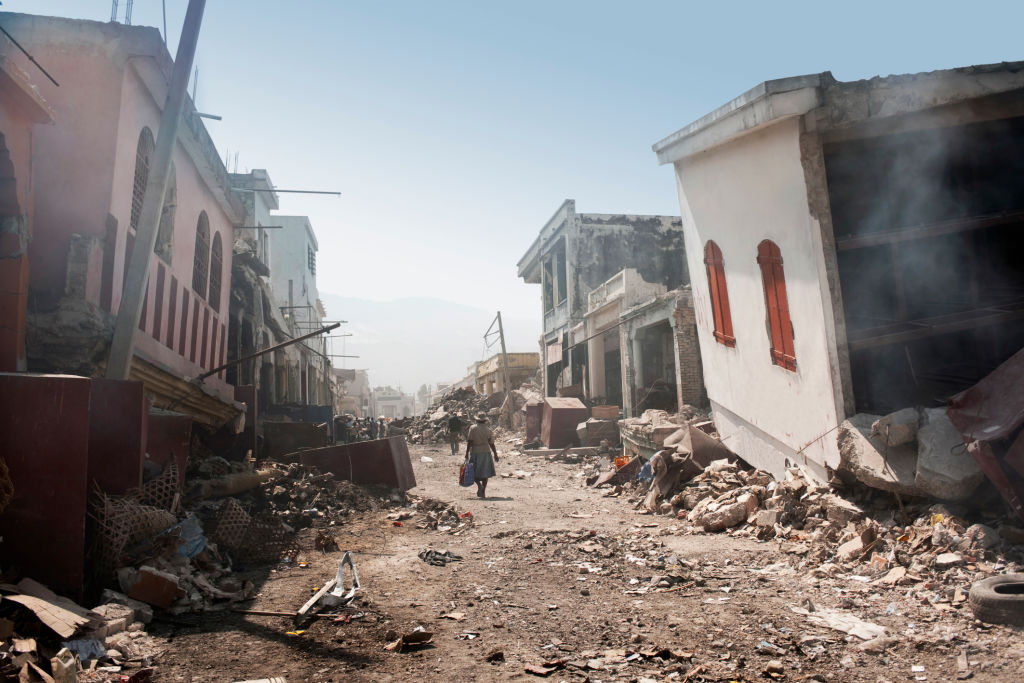
On January 12, 2010, a 7.0 magnitude earthquake struck about 25 kilometers from the Haitian capital, Port-au-Prince. It completely ravaged the island, killing about 220,000 people and damaging or destroying around 293,000 homes. Estimates say that about 3.5 million people were affected by the quake, when the country only had a population of just over 9 million. This, compounded with the fact that the country was and still is the poorest in the Western Hemisphere, made a recipe for disaster. Many organizations and countries moved quickly to help Haiti, but many of these attempts were met with controversy.
One of these flawed attempts was the United Nations Stabilization Mission in Haiti (MINUSTAH).
The UN Peacekeeping Pandemic and Damages
MINUSTAH was established in 2004, but we are going to focus on the earthquake response in 2010 and soon after. Many peacekeeping missions are riddled with controversy, and this one is no different.
Following the earthquake, the UN scrambled to provide support to Haiti. This support made the recovery efforts much worse.
Prior to the earthquake, an outbreak of cholera had taken place in Nepal that September. Almost immediately after that a contingent of Nepalese peacekeepers were deployed to Haiti. A group of these peacekeepers were sent to a base camp in the Haitian village, Meille. Infrastructure in Haiti was poor before the earthquake and was even more horrendous after.
Soon after their arrival it was reported that a septic pit from the camp was overflowing and leaking into a nearby river. This river was a tributary that connected to the Artibonite, the largest river in Haiti (Fraulin, Lee, and Bartels, 2022). Due to the strains Asian origins it spread like wildfire in Haiti. The battered country was in no way prepared for the outbreak and there has been over 820,000 cases reported with around 10,000 deaths.
After the total blunder caused by the UN, they tried to repair the damages with a $400 million pledge in 2016. They decided that this pledge should be done through an international effort of voluntary donations. The voluntary effort failed miserably as they were only able to raise around 5% of the promised funds.
At a time when the international community could unite and truly support Haiti, they not only made the situation worse, but then doubled-down on it by failing the country again 5 years later.
An Industrial Park that Underdelivered
The Caracol Industrial Park (CIP) began operation in 2012, with the support of the U.S. government and the Inter-American Development Bank. The goal of the park was to alleviate poverty through job creation. At it’s inception the park was believed to be a huge success and would have provide jobs to around 65,000 people. Controversy soon set in.
The park displaced around 400 farming families and many programs were largely underfunded. They failed to meet the benefits they promised to factory workers. At it’s peak the park only employed around 15,000 people.
There have been further efforts to improve CIP, including a $65 million loan from the IDB. However, there has been no clear indicators if the expansion has resolved any of the previous issues.
International Community Fails Haiti Once Again
Deploying initially in June 2024, the Multinational Security Support mission aimed to combat gang violence in the country. This mission was authorized by the UN Security Council with 13 voting in favor and 2 abstentions (Russia and China) in 2023 and was to be led by Kenya. The goal was to have the MSS mission work closely with Haitian National Police (HNP) to counter gangs, restore security, and create conditions for free and fair elections. Within this scope, there was never any clear objective as to how this would be accomplished. This mission was a testing ground for a new model of peacekeeping. However, this missions pitfalls were very quickly exposed.
Funding immediately became an issue as it relied solely on voluntary contributions. The mission was expected to cost about $600 million annually and it only received around $400 million in pledged donations in its first year. This trend would continue as the country and mission was never given access to appropriate resources and personnel.
Personnel was another issue. The MSS mission called for around 2,500 personnel, but never came close to this number. At its peak it only reached between an estimated 800-1,000. The lack of funding, personnel, and clear objectives led the mission to be an objective failure.
The one main purpose of the MSS mission was to counter gangs. With that said, there is one key statistic that stands out. In 2025, it was estimated that 85% of Port-au-Prince was under control by gang influence. The following year, it was estimated that 90% of Port-au-Prince. While the mission was a clear failure that in writing the international community has not given up yet.
The Most Recent Attempt to Right the Ship
On September 30, 2025, the UN Security Council authorized the transition from the MSS mission to the Gang Suppression Force (GSF). Similar to the MSS mission, the GSF is funded by voluntary contributions, instead of a direct funding source. It is currently authorized to have around 5,500 uniformed personnel and 50 civilians supporting in the mission.
As of July 2026, there is 1,083 military personnel deployed in Haiti along with 16 civilian staff.
The Gang Suppression Force is still a relatively young mission. On the surface the international community changed the name but kept the issues of funding, personnel, and clear objectives. Time will tell how successful this mission will be, but as each poorly designed effort comes and goes the situation in Haiti only continues to worsen.
Written Wishes with Failed Actions
Throughout each of these examples one trend that becomes clear is that on paper every problem can be solved. MINUSTAH and the earthquake response, Caracol Industrial Park, and the MSS all sounded like great plans before implementation. But, every single project had either very limited success, problems from the beginning or serious critical failures. These issues of accountability not only stem from the flowery wishes and goals written in the planning phases, but also in action. Each one of these projects were riddled with malpractice and the only people that get hurt are those that need help the most.
Main Photo:
Leave a Reply