
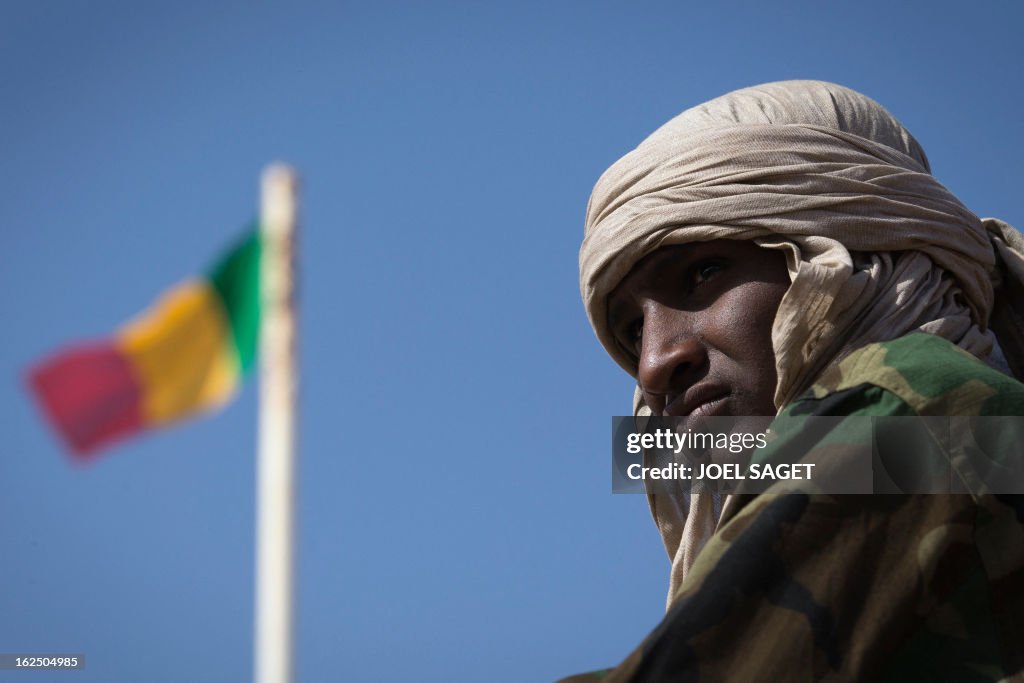
On 22 July, the Trump administration publicly weighed the idea of military intervention in Mali. A series of recent attacks by the Al-Qaeda affiliated group Jama’at Nusrat al-Islam wal-Muslimin (JNIM) and Islamic State in the Sahel Province (ISSP) has Washington on high-alert.
While stifling the groups rapid growth is a concern, U.S. military action would raise bigger questions about Mali’s sovereignty, China and Russia’s influence in the region, minerals, and global jihadism.
Mali’s Legitimacy Problem
After coups in 2020 and 2021, Assimi Goïta seized the presidency and has since led the country’s ruling junta. Goïta, unelected, has derived his legitimacy from his anti-Western platform centered on Malian sovereignty. In the last five years, Mali has expelled French forces, forced an exit of a UN peacekeeping mission, withdrawn from ECOWAS, and tapped Russian forces to provide security and fight jihadists.
While Goïta is weak politically, he has done enough to rally Malians around sovereignty, and the idea that they are no longer dependent on Paris or Washington. U.S. military involvement would undermine that, and put the ruling junta in a tough position. This creates a dilemma for Mali’s government: asking the U.S. for help makes the junta appear weak, and unable to defend its people, but it hasn’t said no yet, which may be an answer in and of itself.
The truth is, U.S. air capabilities and intelligence would improve Mali’s ability to track, target and degrade jihadist groups. Russian forces have proved to be largely ineffective against JNIM and ISSP. At the same time, U.S. strikes on Malian soil could make the political situation untenable. The ruling junta already struggles to establish legitimacy outside of the capital, Bamako, where JNIM and its allies control large swaths of territory.
Hard Power Problems
Before 2020, France was the dominant power in the Sahel region, with the U.S. maintaining a significant presence as well. While providing security and counterterrorism, the Western powers became associated with foreign interference, fueling resentment among governments and large segments of the population.
Mali, Burkina Faso and Niger have all expelled French forces, with Niger also expelling a significant U.S. presence. These countries embraced Russia, hoping to fill the void left by Western forces, and enjoy wider latitude to handle domestic affairs. Russian forces, however, have been overpowered by well-equipped, well-motivated jihadist groups. Additionally, atrocities and war crimes committed by Russian fighters have turned public opinion against ruling juntas, even encouraging some secular ethnic groups to align with jihadists.
The Trump administration may see striking Mali as necessary to degrade JNIM and ISSP capabilities, but also to re-assert themselves in the Sahel region.
Mineral Musings
In 2024, gold accounted for roughly 80% of Mali’s foreign exports, making it the backbone of the country’s export economy. Goïta, since becoming president, has taken a stronger stance against foreign investors from Canada, the UK and Australia. Through increased taxes, greater state ownership and seizure of company resources, the junta has exercised control over the gold industry. Mali also contains significant deposits of lithium, iron ore and phosphates, minerals that foreign powers would love to get their hands on.
Right across the border, in Niger, China has established a foothold in the production of a mineral that always finds itself at the core of geopolitical tension: uranium. Niger’s uranium deposits fueled the rise of France’s nuclear weapons program for decades, until the expulsion of French investors in 2023. In 2024, a Chinese company re-opened a Nigerien uranium mine that had previously closed in 2015.
China’s increasing presence in the region, from oil to minerals to infrastructure, highlights their increasing soft power in places previously economically aligned with the West. The Trump administration sees minerals as a crucial part of their national security strategy, and striking a deal with Mali may be seen as a way to narrow the gap with China’s growing influence over the region’s mineral resources.
Contemporary Jihadism
The west, and the U.S. in particular has spent over two decades fighting jihadist groups around the world. From Al-Qaeda in Afghanistan, intervention in Syria and Iraq against ISIS and involvements in countless other countries, the U.S. has expended enormous resources, manpower and money in the “war on terror”. In 2019, ISIS was territorially defeated in Syria by U.S. backed forces, and since, jihadism has taken on a different, less-centralized form.
Rather than establishing a “caliphate,” jihadist groups have embedded themselves in regional conflicts, exploited weak governance, and steadily gained territory in the Sahel, Somalia, Chad and other African countries. Rather than purely ideology, the rise in regional jihadist movements is driven by economic, ethnic or other local grievances.
In Mali, U.S. intervention could therefore weaken the ruling junta while simultaneously strengthening the jihadist groups Washington hopes to defeat. These groups have long used U.S. involvement as a recruitment tool, fueling an ideological narrative and swelling ranks. While the latent impacts of U.S. attacks are impossible to calculate, it is possible (and has been the case in the past) that military action could result in further destabilization of the region, creating favorable conditions for groups like JNIM and ISSP to topple the ruling junta.
The Reality
While the U.S. could make a difference in the fight against jihadist groups in the Sahel, the consequences will be more than just another bombing campaign. The Trump administration’s desire for minerals, or even simply a stronger standing in the region, could undermine the ruling juntas it hopes to stabilize. The U.S. would like to avoid total collapse of the Sahel states, which would allow for JNIM or ISSP to take control, and embed themselves in state institutions.
With the Trump administration at war with Iran, and missile stockpiles low, an imminent attack on Mali seems unlikely. However, if jihadist groups continue to express territorial ambitions, the U.S. could see military intervention as a necessity, further complicating an already precarious security environment.

Leave a Reply